Laurie's Blogs.

Jun 2026
One Supplement Canine Rehabilitation Practitioners Should Consider: Collagen Supplementation – Translational Insights from Human Research and Canine Evidence
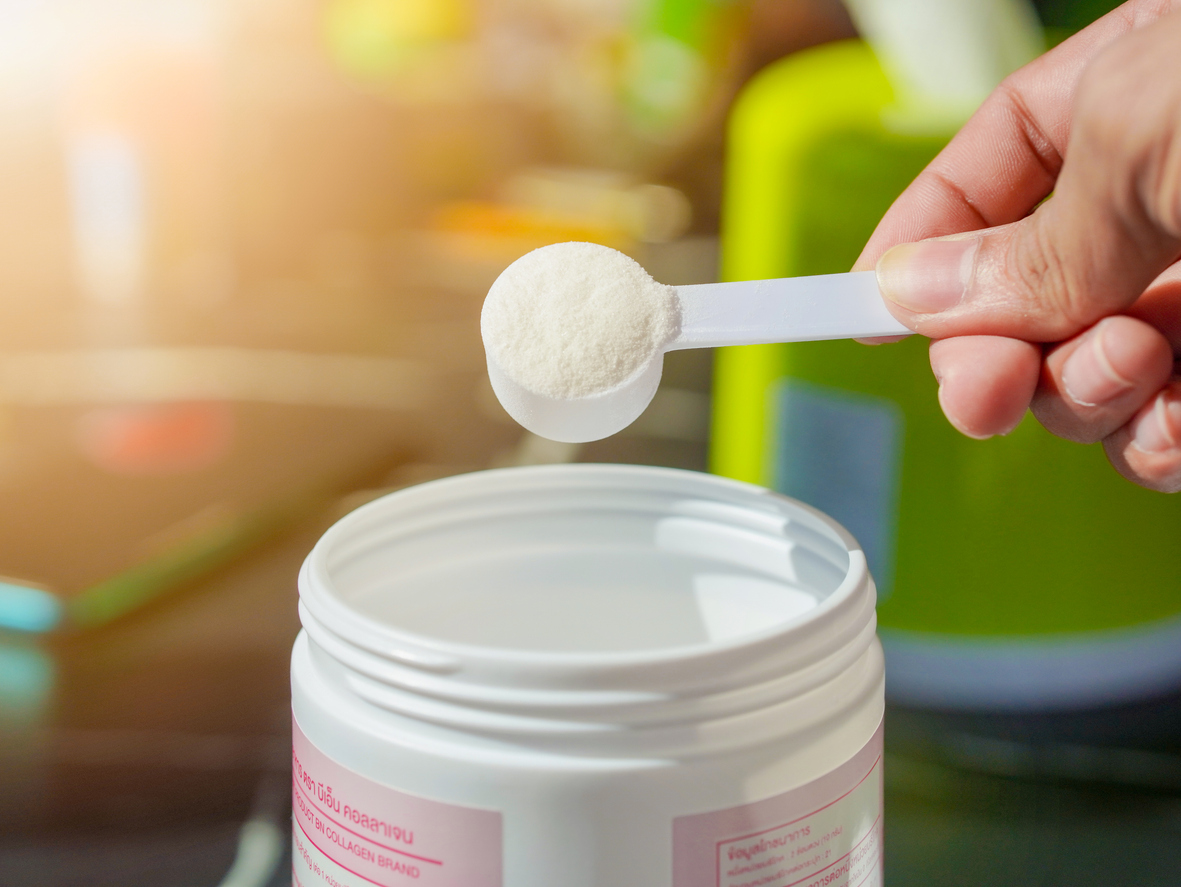
As canine rehabilitation practitioners, we work with post-surgical patients, dogs with osteoarthritis (OA), sporting dogs recovering from soft tissue injuries, and aging animals facing mobility challenges. While therapeutic exercise, manual therapy, hydrotherapy, and other modalities remain central, nutrition could serves as a valuable adjunct. Collagen supplementation—particularly hydrolyzed collagen peptides and undenatured type II collagen (UC-II)—has gained attention in human rehabilitation and sports science. This article reviews a few key human findings and translates them to canine practice.
Human Evidence on Collagen for Recovery
In humans, specific collagen peptides (e.g., ~15 g daily) combined with concurrent training over 12 weeks reduced biochemical markers of muscle damage and improved functional recovery, such as countermovement jump height. These benefits appear linked to collagen’s role in supporting extracellular matrix repair in muscle and connective tissues.
Translational Application to Dogs: In canine rehab, this suggests potential value for post-operative or post-injury patients undergoing structured exercise programs. Pairing collagen with controlled therapeutic loading could theoretically support faster return to function, though direct canine trials on muscle damage markers are limited. Practitioners might consider it as a low-risk adjunct in multimodal recovery protocols.
Human Evidence on Body Composition
A systematic review found modest improvements in fat-free mass with collagen peptide supplementation, primarily when combined with resistance training. Benefits were more pronounced in sarcopenic or older populations, with one study noting notable lean mass gains alongside exercise. Collagen is not a superior standalone muscle-builder compared to other proteins like whey in all contexts.
Translational Application to Dogs: For sarcopenic, obese, or deconditioned dogs in rehab, collagen plus therapeutic strengthening exercises may support improvements in lean mass and body composition. This aligns with weight management and muscle preservation goals but should not replace a balanced diet or primary exercise interventions. Effects are likely synergistic rather than independent.
Human Evidence on Tendon Health
In middle-aged men, hydrolyzed collagen supplementation (10–30 g) combined with 12 weeks of resistance training enhanced patellar tendon adaptations—including greater increases in stiffness, Young’s modulus, and cross-sectional area—compared to training alone. Timing (ingestion ~30–60 minutes before exercise) may optimize amino acid delivery to loaded tendons.
Translational Application to Dogs: This is highly relevant for common canine conditions like Achilles tendinopathy, supraspinatus tendinopathy, or cranial cruciate ligament (CCL) rehab. Aging or injured tendons in dogs may benefit from collagen-supported loading during rehab exercises. Pre-exercise timing could be explored, though species-specific pharmacokinetics warrant caution.
Canine-Specific Evidence (Primarily for Osteoarthritis)
Stronger direct evidence exists in dogs for OA management:
• Bioactive collagen peptides (BCP) in a 2024 placebo-controlled, double-blind study of 31 dogs with natural OA improved kinetic gait parameters (e.g., peak vertical force) and owner-reported pain/quality of life (CBPI) over 12 weeks.
• Undenatured type II collagen (UC-II) studies show reductions in pain, lameness, and mobility scores (e.g., LOAD), often comparable or additive to NSAIDs, with benefits seen in 30–120 days.
• Systematic reviews and additional trials support collagen-based nutraceuticals (hydrolyzed or undenatured) as part of multimodal OA management, with good tolerability.
Note on Translation: Canine OA studies often use hydrolyzed collagen or UC-II and demonstrate clinical benefits, reinforcing the plausibility of human tendon and recovery findings applying to dogs.
Practical Recommendations for Canine Rehab (Translational + Evidence-Based)
•Types: Hydrolyzed collagen peptides for general connective tissue support (translational from human tendon/recovery data); UC-II for immune-modulating OA benefits (strong canine evidence).
• Dosing: Follow veterinary product guidelines or study protocols (e.g., BCP ~200 mg/kg/day in one canine OA trial; UC-II often ~10–40 mg/day). Scale human doses (10–15 g or 30 g) cautiously by body weight.
• Timing: 30–60 minutes before therapeutic exercise sessions, based on human tendon data.
• Integration: Combine with evidence-based rehab (loading exercises, weight control). Monitor with force-plate gait analysis, CBPI/LOAD scores, or video assessments.
• Safety: Generally well-tolerated in both human and canine studies; owners can be informed, but may wish to consult with their veterinarian if they have concerns.
Collagen is not a miracle intervention but represents a promising, evidence-informed adjunct. Human data on recovery, body composition, and tendon health provide a translational rationale for exploration in dogs, while robust canine OA trials offer direct support for joint health applications. Canine rehabilitation practitioners can enhance outcomes by discussing these options with clients and veterinarians as part of individualized plans.
Future research bridging human mechanistic insights with canine functional outcomes would further strengthen clinical decision-making.
REFERENCES
Bischof, K., Stafilidis, S., Bundschuh, L., Oesser, S., Baca, A., & König, D. (2023). Influence of specific collagen peptides and 12-week concurrent training on recovery-related biomechanical characteristics following exercise-induced muscle damage—A randomized controlled trial. Frontiers in Nutrition, 10, Article 1266056. https://doi.org/10.3389/fnut.2023.1266056
Cabezas, M. Á., Rubio, M. D., Daza, A., & Cugat, R. (2022). Long-term supplementation with an undenatured type-II collagen (UC-II®) formulation in dogs with degenerative joint disease: Exploratory study. Veterinary Medicine and Science, 8(2), 560–567. https://doi.org/10.1002/vms3.677
Comblain, F., Serisier, S., Barthelemy, N., Balligand, M., & Henrotin, Y. (2016). Review of dietary supplements for the management of osteoarthritis in dogs in studies from 2004 to 2014. Journal of Veterinary Pharmacology and Therapeutics, 39(1), 1–15. https://doi.org/10.1111/jvp.12251
Dobenecker, B., Reese, S., & Weber, P. (2024). The oral intake of specific bioactive collagen peptides (BCP) improves gait and quality of life in canine osteoarthritis patients—A translational large animal model for a nutritional therapy option. PLOS ONE, 19(9), Article e0308378. https://doi.org/10.1371/journal.pone.0308378
Khatri, M., Naughton, R. J., Clifford, T., Harper, L. D., & Corr, L. (2021). The effects of collagen peptide supplementation on body composition, collagen synthesis, and recovery from joint injury and exercise: A systematic review. Amino Acids, 53(10), 1493–1506. https://doi.org/10.1007/s00726-021-03072-x
Nulty, C. D., et al. (2025). Hydrolysed collagen supplementation enhances patellar tendon adaptations to 12 weeks’ resistance training in middle-aged men. European Journal of Sport Science, 25(4), Article e12281. https://doi.org/10.1002/ejsc.12281
Stabile, M., Righetto, M., Poser, H., Boschin, S., & Pavan, R. (2022). Evaluation of clinical efficacy of undenatured type II collagen supplementation compared to cimicoxib and their association in dogs affected by natural occurring osteoarthritis. Research in Veterinary Science, 150, 156–163. https://doi.org/10.1016/j.rvsc.2022.06.
Varney, J. L., Fowler, D., & McDonald, C. (2022). Impact of supplemented undenatured type II collagen on pain, mobility, and inflammation in Labrador Retrievers with exercise-induced joint pain. Translational Animal Science, 6(3), txac123. https://doi.org/10.1093/tas/txac123
Zapata, A., et al. (2023). A scoping review of undenatured type II collagen and Boswellia serrata in the management of osteoarthritis in dogs. Animals, 13(5), 870. https://doi.org/10.3390/ani13050870