Laurie's Blogs.

Jun 2026
Forelimb Biomechanics in Retriever Dogs Carrying Mouth Weights: Implications for Canine Rehabilitation
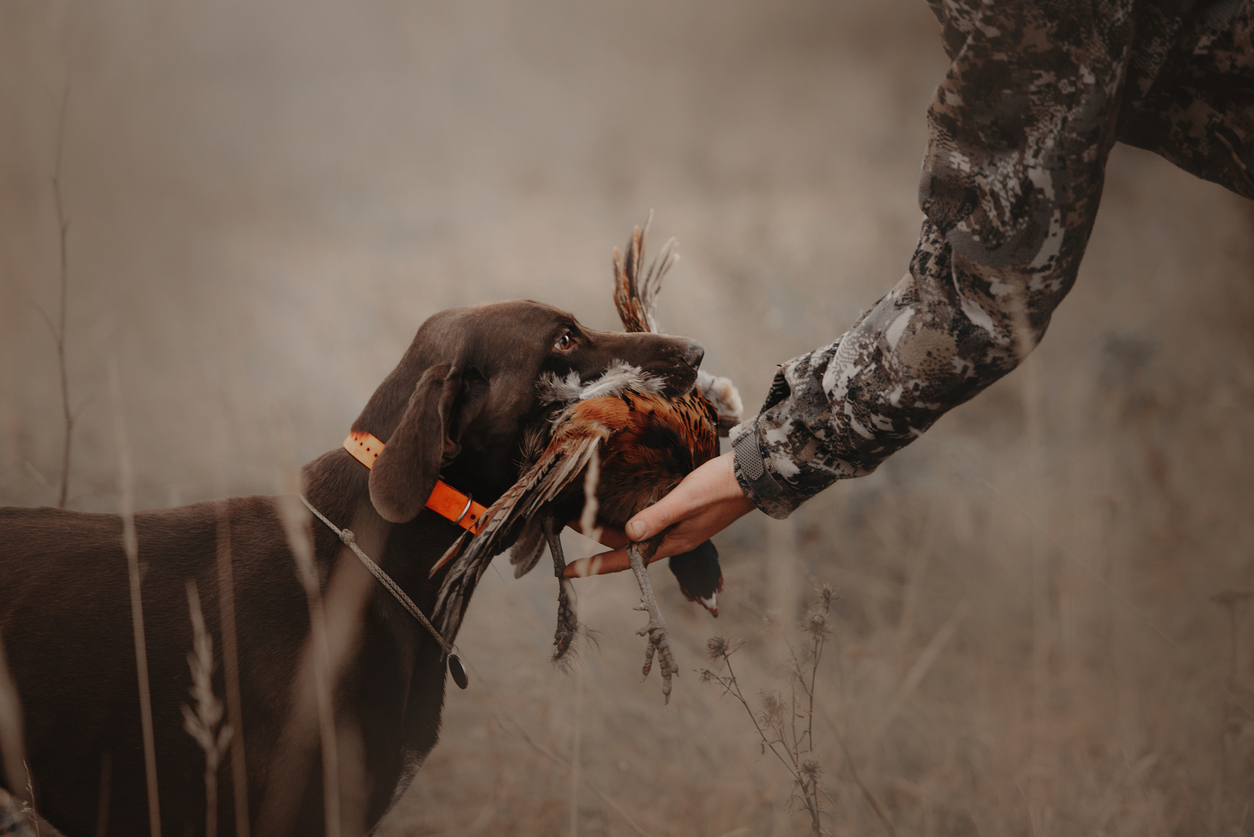
Retriever breeds frequently carry game birds or training dummies during hunting, field trials, and performance activities. This behavior has long been hypothesized to contribute to forelimb overload and biceps tendinopathy. Two key studies—one using pressure-plate gait analysis and the other combining it with acoustic myography (AMG)—provide objective data on how mouth weights affect load distribution and forelimb muscle function.
Bockstahler et al. (2016) evaluated 10 actively working Labrador Retrievers walking over a pressure plate while carrying 0 kg, 0.5 kg, 2.0 kg, or 4.0 kg dummies. Peak vertical force and vertical impulse increased significantly in the forelimbs and decreased in the hindlimbs with each increment in weight. Paw contact area showed minimal change, but step length shortened, particularly with the heaviest load. The authors concluded that carrying weight in the mouth produces compensatory load redistribution that places additional stress on forelimb joints, muscles, and connective tissues.
Weber et al. (2022) extended this work by examining both gait parameters and muscle-level function in 10 sound retriever dogs (primarily Labradors) carrying 0 lb (0 kg), 1 lb (0.45 kg), or 3.2 lb (1.45 kg) mouth weights at walk and trot. Forelimb total pressure index (TPI) rose with increasing mouth weight, confirming greater forelimb loading. However, AMG parameters from acoustic myography - a non-invasive technique that measures muscle function via sound vibrations produced by contracting fibers - showed no significant effect of weight on any individual muscle (biceps brachii, long head of triceps, acromial deltoideus, or brachiocephalicus). Between-muscle comparisons revealed that the deltoideus had a significantly longer contraction time at the trot under 1 lb and 3.2 lb loads compared with the brachiocephalicus. Critically, the biceps brachii did not demonstrate increased work or recruitment with added weight. The authors concluded that while forelimb load increases, the etiology of biceps tendinopathy in retrievers is unlikely due to mouth-weight overload.
Clinical Relevance for Canine Rehabilitation Professionals
• Re-evaluate Biceps Tendinopathy Etiology: These data challenge the assumption that mouth weights directly overload the biceps. Rehabilitation should instead address repetitive eccentric control, shoulder stabilization, or other contributing factors (e.g., repetitive galloping retrieves).
• Target Shoulder Stabilizers: The deltoideus showed prolonged contraction time under load at trot; incorporate specific strengthening, endurance exercises, and fatigue monitoring for this muscle and its synergists in shoulder rehabilitation protocols.
• Training and Prevention Guidance: Advise gradual dummy-weight progression, regular orthopedic screenings, and balanced conditioning that includes hindlimb engagement to mitigate forelimb overload. AMG offers a non-invasive, real-time method to track muscle efficiency and fatigue in performance dogs.
• Holistic Return-to-Sport Planning: Programs should emphasize load management, proprioceptive training, and monitoring of both forelimb and axial musculature to support long-term athletic health.
Together, these studies underscore the biomechanical demands placed on retriever forelimbs during retrieving tasks while refining our understanding of common tendinopathies. Canine rehabilitation professionals can use this information to design targeted, evidence-informed programs that optimize performance and reduce injury risk in working and sporting retrievers.
References
Bockstahler, B., Tichy, A., & Aigner, P. (2016). Compensatory load redistribution in Labrador retrievers when carrying different weights – a non-randomized prospective trial. BMC Veterinary Research, 12, Article 7. https://doi.org/10.1186/s12917-016-0715-7
Weber, M. A., Manfredi, J. M., & Tomlinson, J. E. (2022). Use of acoustic myography to evaluate forelimb muscle function in retriever dogs carrying different mouth weights. Frontiers in Veterinary Science, 9, Article 983386. https://doi.org/10.3389/fvets.2022.983386