Laurie's Blogs.

Apr 2026
Exercise Strategies in Canine Rehabilitation: Stressor or Down Regulator?
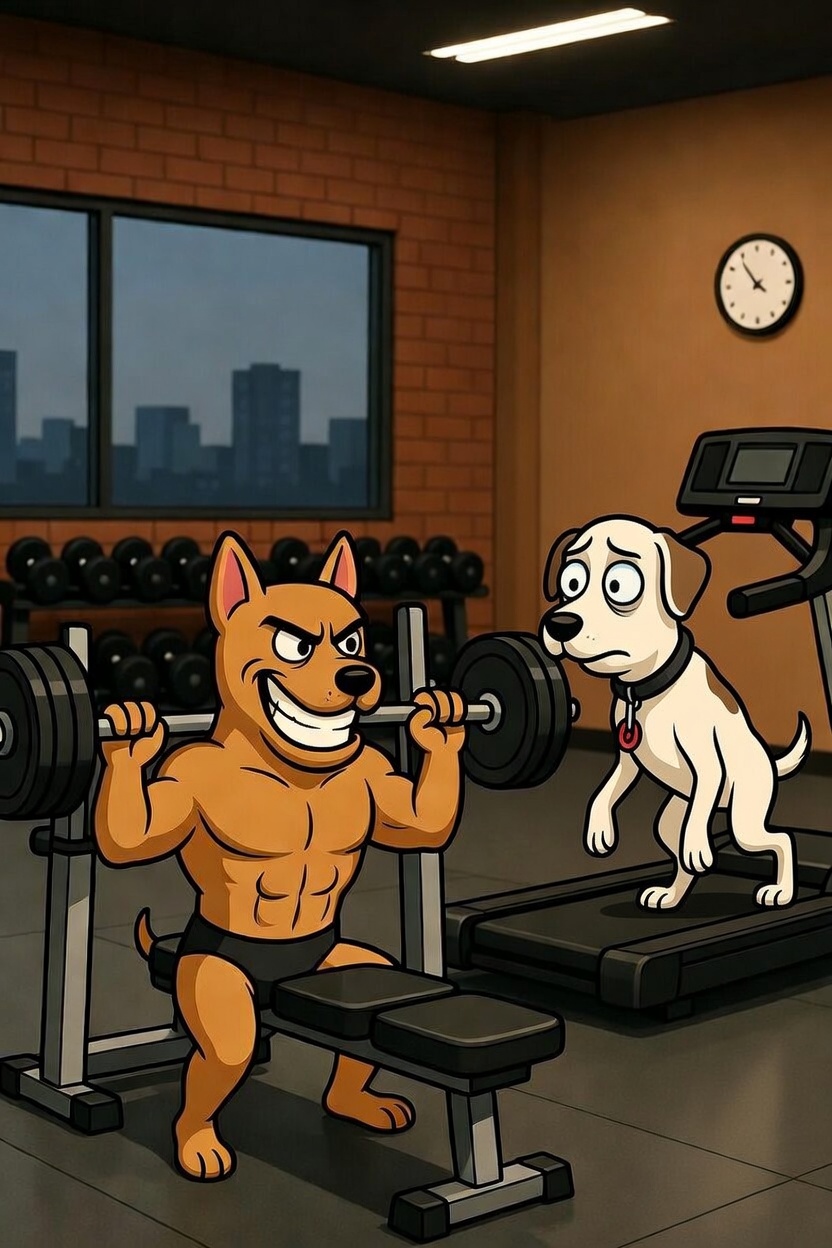
In canine rehabilitation practice, we tend to default to certain ways of thinking about exercise. We talk about strengthening, stretching, muscle activation, or the current push toward heavier loading and progressive overload. These are all familiar tools, but perhaps the most effective programs aren’t defined by the exercises themselves. They’re defined by the underlying strategy.
It is helpful to pause at the start of every plan and ask a simple question: Is this exercise session meant to act as a stressor or a down regulator?
When we’re working with dogs that have musculoskeletal or neurological issues, this distinction can make a real difference. I’ve seen cases where dogs seem to plateau or even take a step backward—not because the effort wasn’t there, but because the exercise strategy didn’t quite match what the tissues needed at that moment in their healing journey.
Defining the Two Strategies
Exercise as a stressor is about deliberately challenging the tissues to drive adaptation. It uses controlled mechanical tension and progressive loading to stimulate muscle hypertrophy, improve strength, and rebuild functional power. This approach becomes especially relevant when the goal is to rebuild muscle that has been lost during periods of rest or immobilization after surgery or injury.
Exercise as a down regulator, on the other hand, focuses on gentle neuromuscular activation without adding significant stress to healing or inflamed structures. The aim here is to reduce guarding, support circulation, prevent excessive atrophy, and keep proprioceptive signals flowing. It helps calm the nervous system, manage inflammation, and protect early repair processes.
It’s surprisingly easy to get this choice wrong. A dog in the later stages of recovery who only receives very gentle activation work may miss out on the stimulus needed to regain meaningful strength. Conversely, applying aggressive loading too early in an acute soft tissue injury can prolong inflammation and slow progress. Getting the strategy right, at the right time, often leads to smoother recoveries and better long-term outcomes.
When Exercise as a Stressor Makes Sense: Later Stages of Post-Operative Joint Recovery
Stressor-type exercises are appropriate once tissue healing has progressed to being more stable and inflammation has settled—typically in the later phases after major orthopedic procedures.
In cases like cranial cruciate ligament repairs, when the surgical site is stable and joint inflammation has fully dissipated, exercises that introduce controlled mechanical tension can help rebuild the quadriceps and hamstrings that often atrophy significantly during the early recovery period. This supports better stifle stability and overall power for daily activities.
With hip surgeries—whether femoral head ostectomy or total hip replacement—once bone remodeling is underway and the dog is bearing weight more consistently, loading strategies can play a useful role in restoring strength in the gluteals, iliopsoas, and quadriceps groups.
After osteochondritis dissecans lesion removal in the shoulder or elbow, once the initial protected phase has passed, dynamic movements that challenge the surrounding muscles and proximal stabilizers can encourage better collagen organization and joint stability under load.
The guiding idea is always controlled challenge, tailored to the individual dog’s progress. I pay close attention to how the dog responds the following day—any increase in lameness, swelling, or discomfort usually signals that it’s time to ease back and adjust.
When Exercise as a Down Regulator Is More Appropriate: Early or Sub-Acute Phases
In the inflammatory and early repair stages—right after surgery or in the immediate aftermath of acute soft tissue trauma like strains or sprains—down-regulator strategies are helpful to healing.
During the sub-acute phase following any joint surgery, when the joint capsule and surrounding tissues are still vulnerable, gentler movement approaches can encourage muscle activity through the available range without creating excessive stress or shear forces on the healing site (i.e. weight shifting or three leg stands).
For acute soft tissue injuries—such as iliopsoas strains, supraspinatus tendinopathy, or issues involving the Achilles tendon—the priority is preventing adhesions and muscle non-use while avoiding any further disruption to the fibers. Low-level, pain-free active movement in these cases helps with circulation and edema reduction without reigniting inflammation.
A Practical Way to Think About It
Over the years, I’ve found it useful to run through a few questions when planning:
- Where is the dog in the healing timeline? What do the clinical signs (pain, swelling, heat, lameness) and any imaging or surgeon input tell me?
- What’s the main goal right now—building muscle and power, or supporting circulation, calming pain responses, and preserving neuromuscular connections?
- How did the dog respond after the last session? I like the simple 24-hour rule: any noticeable increase in swelling, heat, or lameness usually means the strategy or dosage needs tweaking.
- Is the plan progressing thoughtfully? Down-regulator work is still active and purposeful. When the time is right, the shift to stressor loading should feel like a natural step rather than a sudden jump.
Why the Strategy Choice Matters
Dogs that end up with mismatched approaches often show the same patterns: lingering muscle loss even when owners are diligent with home programs, repeated flare-ups, or difficulty getting back to their normal level of activity. When we intentionally match the strategy to the phase and the needs of the tissues, I see better strength gains, fewer setbacks, and more consistent returns to function.
The next time you’re putting together a rehab plan, take a moment before selecting the exercises. Ask yourself: Is today’s session about stressing the tissues to encourage adaptation, or about gently down-regulating and protecting them?
That single consideration can influence the dog’s recovery more than any individual exercise on its own.
Until next time,
Cheers!
Laurie