Laurie's Blogs.

Mar 2026
Surgical Options for Severe Elbow Osteoarthritis in Dogs: Key Findings from a Systematic Review
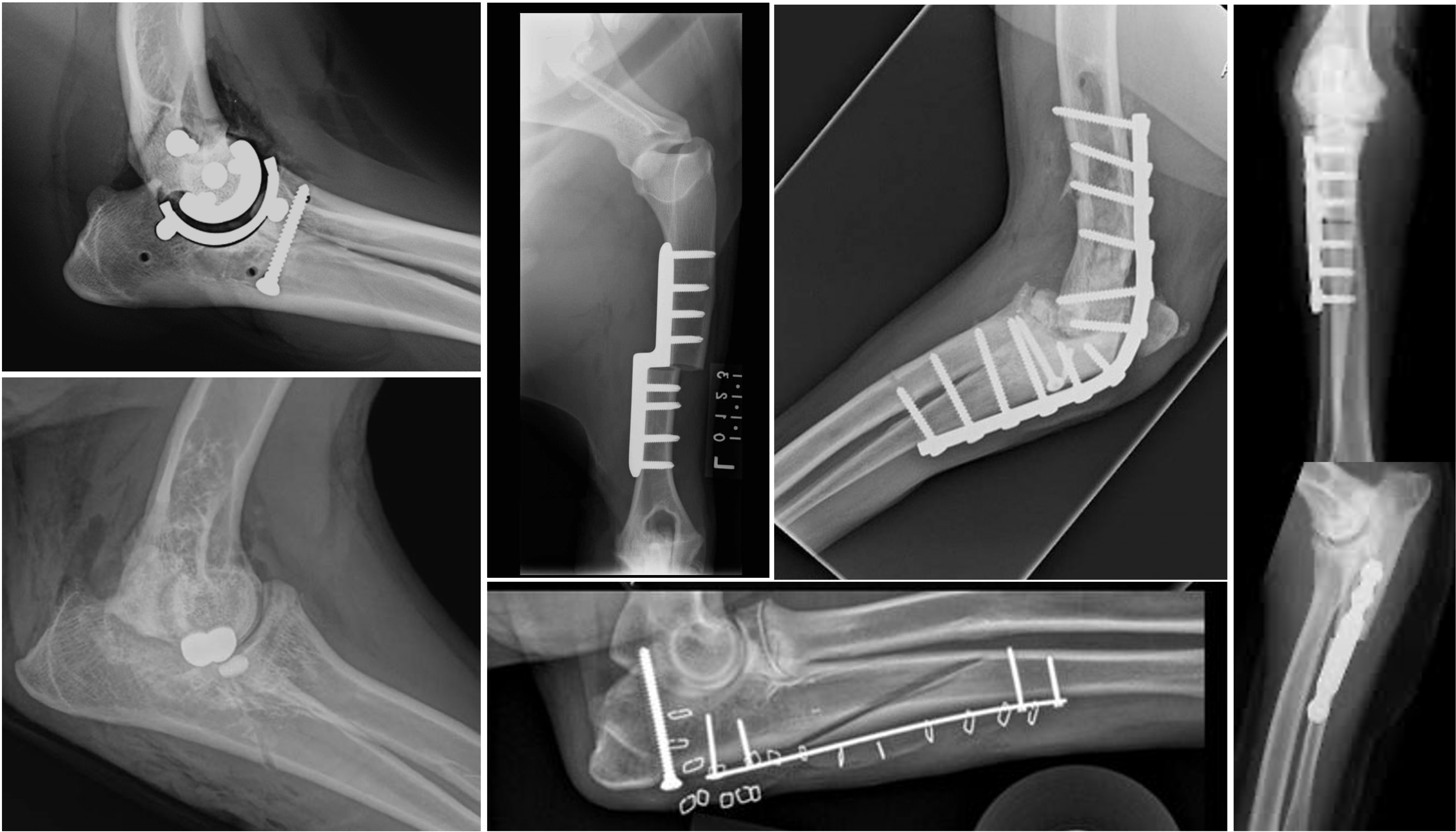
Elbow osteoarthritis (OA) remains a significant challenge in veterinary orthopedics, affecting up to 57% of canine elbows in large cohorts, with severe cases comprising about 16.4%. Often stemming from conditions like fragmented coronoid process (FCP), osteochondritis dissecans (OCD), or elbow incongruity, severe OA typically impacts the medial compartment more profoundly. When conservative management—such as NSAIDs, weight control, and intra-articular therapies—falls short, surgical interventions become another option. A recent systematic review by Yu et al. (2025) evaluates the evidence for these procedures, aiming to identify the most effective options with minimal harm. As rehabilitation professionals, we should know this information as well!
Review Methodology
The authors conducted a comprehensive literature search and screened 1231 unique articles. Inclusion criteria focused on peer-reviewed, English-language studies describing surgical treatments for naturally occurring elbow OA in dogs, with at least 6 weeks of clinical follow-up. Exclusions encompassed primary procedures (e.g., fracture repairs or arthroscopy for dysplasia), non-clinical outcomes, and non-canine or induced disease studies.
Fifteen articles met the criteria. Success was broadly defined as improvements in peak vertical force (PVF), owner satisfaction, or clinical lameness assessments. Major complications (e.g., those necessitating revision, amputation, or euthanasia) were used to calculate number needed to harm (NNH), assuming zero harm for benign neglect.
Key Surgical Interventions and Outcomes
The reviewed procedures included axis-shifting osteotomies (e.g., proximal abducting ulnar osteotomy [PAUL] and sliding humeral osteotomy [SHO]), partial resurfacing (canine unicompartimental elbow [CUE]), salvage options (total elbow arthroplasty [TEA] and arthrodesis), and ulnar osteotomy. Here's a breakdown based on the evidence:
• Canine Unicompartimental Elbow (CUE): Three studies (one prospective with 103 cases, one retrospective with 48, and one case series). Success rates ranged from 91%–98%, primarily via subjective assessments like the Liverpool Osteoarthritis in Dogs (LOAD) questionnaire and physical exams. NNH was 7.6, indicating relatively high harm risk (i.e. one in every 7-8 procedures resulted in a major complication). This procedure resurfaced the medial compartment, showing the strongest evidence overall.
• Sliding Humeral Osteotomy (SHO): Five studies (one small prospective with long-term PVF data on seven cases, plus larger retrospectives). Success varied from 43%–82%, with lameness scores as the main metric. NNH was 9.5.
• Proximal Abducting Ulnar Osteotomy (PAUL): Two studies (both prospective). Outcomes included owner satisfaction and Canine Brief Pain Inventory (CBPI) scores, with high success (76%–98%) but limited case numbers.
• Total Elbow Arthroplasty (TEA): Two studies (one prospective, one retrospective). Assessed via multifactorial scores and surgeon evaluations; success was high but evidence weak due to small samples.
• Arthrodesis: Two retrospective studies. Measured by owner satisfaction and lameness improvement (e.g., LOAD); viable for salvage but with higher complication risks.
• Ulnar Osteotomy: One prospective study using lameness scores; limited data.
Across all, success rates were generally high (76%–98%), but most relied on subjective measures, introducing bias. Harm was quantifiable for some, with overall high NNH indicating significant complication risks (e.g., revisions or euthanasia).
Discussion and Clinical Implications
Despite promising success in individual studies, the review highlights low overall evidence quality and high harm potential for all procedures. Heterogeneity in outcome measures—ranging from subjective lameness scores to objective PVF—prevents direct comparisons.
For veterinary surgeons, this underscores the need for cautious patient selection and informed consent regarding risks. Future research should prioritize validated, consistent outcomes (e.g., standardized LOAD or force plate analysis) with longer follow-ups to enable meta-analyses. Until then, integrating surgery with multimodal conservative care remains essential.
Laurie’s Thoughts:
If I were a client, I don’t think I would want to jump to any of these surgeries. As a rehab professional, I’m not sure I could advocate for any of them either. And so for me, that is the point of this paper.
Until next time,
Cheers! Laurie
Reference:
Yu AJ, Nault AJ, Gordon-Evans WJ. Systematic review of surgical treatment for severe elbow osteoarthritis in dogs. Vet Surg. 2026 Jan;55(1):32-38.