Laurie's Blogs.

Mar 2026
Stimulating the Vagus Nerve Through Manual Massage: Applications in Veterinary Medicine
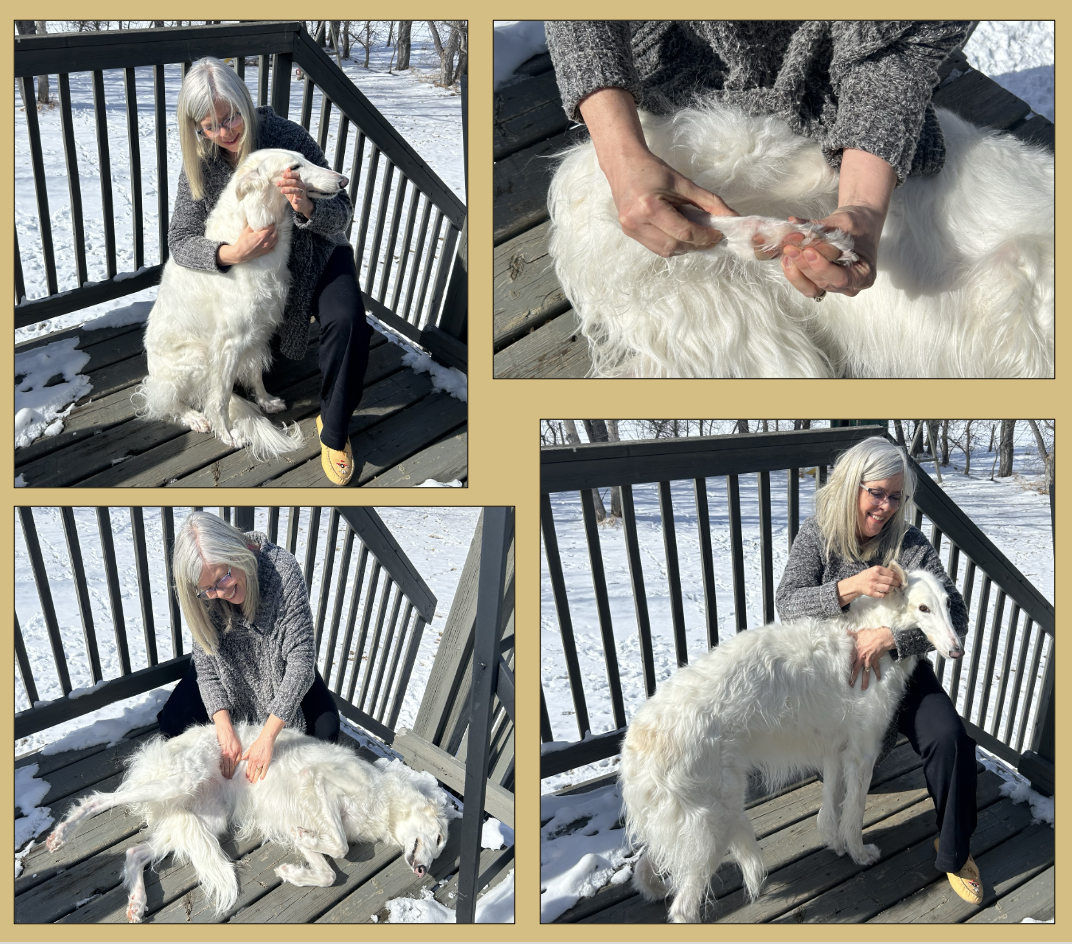
As canine rehabilitation professionals, we are constantly seeking non-invasive, adjunctive therapies to enhance patient outcomes, particularly in managing chronic conditions. The vagus nerve, a key component of the parasympathetic nervous system, plays a pivotal role in regulating autonomic functions such as heart rate, digestion, and inflammation. While electrical vagus nerve stimulation (VNS) has gained traction in treating refractory epilepsy and heart failure in dogs, emerging interest focuses on manual massage techniques as a gentler, accessible method to activate this nerve. This blog explores how these techniques can stimulate the vagus nerve and discusses potential applications to canine ailments, drawing on human research to bridge translational gaps. Although direct veterinary studies are limited, the anatomical and physiological similarities between human and canine vagus nerve pathways support cautious extrapolation.
Understanding the Vagus Nerve in Canines
The vagus nerve (cranial nerve X) is the longest cranial nerve, extending from the brainstem through the neck, thorax, and abdomen. In dogs, as in humans, it modulates the "rest and digest" response, influencing heart rate variability (HRV), gastrointestinal motility, and immune function. Low vagal tone is associated with heightened stress, inflammation, and autonomic imbalance, common in conditions like anxiety, cardiac disease, and epilepsy. Stimulating the vagus nerve enhances parasympathetic activity, promoting relaxation and homeostasis.
Manual Massage Techniques for Vagus Nerve Stimulation
Manual massage targets accessible branches of the vagus nerve, such as those in the neck, ear, and abdomen, to elicit parasympathetic activation. These techniques are derived primarily from human studies but can be adapted for canine patients with minimal risk when performed by trained professionals or taught to owners by trained professionals. Key methods include:
• Neck and Shoulder Massage: Gentle, moderate-pressure strokes along the sternomastoideus and rhomboids muscles access the cervical branch of the vagus nerve. In humans, this has been shown to improve HRV and reduce sympathetic dominance. For dogs, apply slow, circular motions from the base of the skull to the scapula, or skull to the sternum, avoiding excessive pressure to prevent discomfort.
• Auricular (Ear) Massage: The auricular branch innervates the ear, particularly the cymba concha. Light circular rubbing or pulling of the ear for 1-2 minutes stimulates vagal tone, as demonstrated in human trials where it induced relaxation and decreased heart rate. In canines, this can be integrated into routine handling, focusing on the upper ear hollow. Canine-specific guidance suggests such massages can promote relaxation in stressed dogs.
• Abdominal Massage: Clockwise strokes over the abdomen target visceral branches, aiding digestion and reducing gut inflammation. Human research indicates this enhances vagal activity by promoting parasympathetic outflow. For dogs, use light pressure above the navel, combining with deep breathing cues if the patient is cooperative.
• Foot Reflexology: Massaging the paws mimics human foot massage, which boosts vagal function and lowers blood pressure. In veterinary practice, short strokes along the paw pads an metatarsals/metacarpals can be particularly useful for recumbent or anxious patients.
These techniques should be performed for 5-10 minutes daily, tailored to the dog's tolerance. Human studies confirm that gentle, rhythmic touch—rather than deep tissue work—is optimal for vagal stimulation, as aggressive pressure may trigger a sympathetic response. In dogs, monitoring for signs of relaxation (e.g., slower breathing, yawning) ensures efficacy. Emerging canine-focused resources emphasize vagus nerve massages for overall nervous system regulation.
Conditions and Ailments Amenable to Vagal Stimulation in Canines
While electrical VNS is established in veterinary medicine for specific indications, manual massage offers a complementary approach. Human evidence provides a foundation for its use in dogs, given conserved vagal physiology. Potential applications include:
• Epilepsy: Refractory seizures in dogs respond to implanted VNS, with studies showing >50% reduction in frequency after 1-2 years. Human massage studies suggest adjunctive vagal activation via neck or ear techniques may abort seizures by enhancing inhibitory neurotransmitters like GABA. In canines, this could serve as a non-invasive add-on for drug-resistant cases, potentially reducing cluster events by 76-89% as seen in long-term VNS trials.
• Heart Failure and Cardiovascular Conditions: Canine models of pacing-induced heart failure demonstrate that VNS improves left ventricular ejection fraction (LVEF) and reduces inflammation. Human massage research links vagal stimulation to better HRV and attenuated angiotensin II levels, mirroring canine benefits. For dogs with dilated cardiomyopathy or mitral regurgitation, abdominal and neck massage may support autonomic balance and prevent progressive remodeling.
• Anxiety and Behavioral Disorders: Low vagal tone exacerbates stress in dogs, leading to reactivity or fearfulness. Human studies show ear and neck massage reduces anxiety by shifting to parasympathetic dominance. In rats, VNS decreases anxiety-like behaviors, suggesting translational potential for canine separation anxiety or noise phobias. While "reset" myths lack evidence, controlled massage may improve recovery from stressors.
• Inflammatory and Gastrointestinal Disorders: Vagal stimulation attenuates systemic inflammation in canine heart failure models by lowering C-reactive protein. Human applications for conditions like rheumatoid arthritis extend to dogs with arthritis or inflammatory bowel disease, where abdominal massage promotes gut motility and reduces pro-inflammatory cytokines.
• Geriatric Onset Laryngeal Paralysis Polyneuropathy (GOLPP): This progressive polyneuropathy in older large-breed dogs involves degeneration of the recurrent laryngeal nerves (branches of the vagus), leading to laryngeal paralysis, hindlimb weakness, and aspiration risks. Vagal dysfunction is central to the pathology. While surgical tie-back is standard, adjunctive vagal stimulation via neck or ear massage may support nerve function and reduce symptoms, drawing from electrical stimulation models in canine laryngeal paralysis. Polyneuropathy components suggest broader benefits from parasympathetic enhancement.
• Megaesophagus: Often linked to vagal afferent dysfunction or neuromuscular disorders, this condition impairs esophageal motility. Vagal stimulation could improve peristalsis, as esophageal innervation relies on vagal pathways. Abdominal massage techniques may adjunctively aid digestion and reduce regurgitation in affected dogs, extrapolated from human gastrointestinal vagal therapies.
• Other Emerging Applications: Preliminary canine studies hint at benefits for stroke recovery and Parkinson's-like symptoms, based on human neuroprotective effects. Massage could adjunctively support neuroprotection in geriatric dogs, including those with polyneuropathies.
Caution is warranted: while human data justifies exploration, randomized veterinary trials are needed. Start with low-intensity sessions and monitor for adverse effects like coughing.
Conclusion
Manual massage offers a promising, low-cost tool for vagus nerve stimulation in veterinary practice, potentially enhancing outcomes in epilepsy, heart disease, anxiety, inflammation, GOLPP, and megaesophagus. By leveraging human research and emerging canine evidence, we can justify its application to canines, emphasizing parasympathetic activation for holistic care. As evidence grows, integrating these techniques could improve quality of life for our patients and their owners.
Reference List
1. The Vagus Nerve: Reset Techniques and Massage. Method Physical Therapy. Published Jan 13, 2026. Available at: https://www.methodptnm.com/methodphysicaltherapyblog/vagusnervemethodphysicaltherapy
2. 12 Science-Backed Vagus Nerve Exercises for Anxiety Relief. Thriveworks. Available at: https://thriveworks.com/help-with/anxiety/vagus-nerve-exercises
3. Bolster Your Brain by Stimulating the Vagus Nerve. Cedars-Sinai. Published Mar 21, 2024. Available at: https://www.cedars-sinai.org/stories-and-insights/healthy-living/stimulating-the-vagus-nerve
4. Vagus Nerve Massage For Stress And Anxiety Relief. YouTube. Available at: https://www.youtube.com/watch?v=LnV3Q2xIb1U
5. Vagal Nerve Stimulation for the Dog. Downeast Dog News. Published Aug 25, 2025. Available at: https://www.downeastdognews.com/blogs/ask-the-vet/vagal-nerve-stimulation-for-the-dog
6. What is Vagus Nerve Massage and How to Do It at Home. Pulsetto. Available at: https://pulsetto.tech/blogs/blog/what-is-vagus-nerve-massage-and-how-to-do-it-at-home
7. Massage Therapy for the Vagus Nerve: Supporting the Body's Healing Switch. Longwell Massage Therapy. Published Jul 25, 2025. Available at: https://www.longwellmassagetherapy.com/post/massage-therapy-and-the-vagus-nerve-supporting-the-body-s-healing-switch
8. Vagal stimulation by manual carotid sinus massage to acutely suppress seizures. ScienceDirect. 2014. Available at: https://www.sciencedirect.com/science/article/abs/pii/S0967586813002580
9. Long-term outcome of epileptic dogs treated with implantable vagus nerve stimulators. PMC. Published Oct 20, 2023. Available at: https://pmc.ncbi.nlm.nih.gov/articles/PMC10658546
10. Chronic vagus nerve stimulation improves autonomic control and attenuates systemic inflammation and heart failure progression in a canine high-rate pacing model. PubMed. 2009. Available at: https://pubmed.ncbi.nlm.nih.gov/19919995
11. Vagus nerve stimulation improves left ventricular function in a canine model of chronic heart failure. Wiley Online Library. Published Feb 7, 2014. Available at: https://onlinelibrary.wiley.com/doi/full/10.1093/eurjhf/hft118
12. The Effects of Vagus Nerve Stimulation on Animal Models of Stroke-Induced Injury: A Systematic Review. MDPI. 2023. Available at: https://www.mdpi.com/2079-7737/12/4/555
13. Vagal nerve stimulation dynamically alters anxiety-like behavior in rats. ScienceDirect. 2025. Available at: https://www.sciencedirect.com/science/article/pii/S1935861X25000208
14. Case Report: 1-Year Follow-Up of Vagus Nerve Stimulation in a Dog With Drug-Resistant Epilepsy. Frontiers. Published Jul 19, 2021. Available at: https://www.frontiersin.org/journals/veterinary-science/articles/10.3389/fvets.2021.708407/full
15. Chronic Vagus Nerve Stimulation Improves Autonomic Control and Attenuates Systemic Inflammation and Heart Failure Progression in a Canine High-Rate Pacing Model. Circulation. Published Sep 22, 2009. Available at: https://www.ahajournals.org/doi/10.1161/circheartfailure.109.873968
16. Vagus nerve stimulation in Parkinson's disease: a scoping review of animal studies and human subjects research. Nature. Published Oct 24, 2024. Available at: https://www.nature.com/articles/s41531-024-00803-1
17Laryngeal paralysis in dogs: An update on recent knowledge. SciELO. 2013. Available at: http://www.scielo.org.za/scielo.php?pid=S1019-91282013000100058&script=sci_arttext
18. What is GOLPP? All About GOLPP. Available at: https://www.allaboutgolpp.com/vets-what-is-golpp
19. Diagnosis and management of megaesophagus in dogs. dvm360. Available at: https://www.dvm360.com/view/diagnosis-and-management-megaesophagus-dogs-proceedings
20. Vagal afferent dysfunction in naturally occurring canine esophageal motility disorders. PubMed. 1994. Available at: https://pubmed.ncbi.nlm.nih.gov/7924726
21. Part 2. Device Testing in the Canine Model of Laryngeal Paralysis. SAGE Journals. Published Jan 27, 2019. Available at: https://journals.sagepub.com/doi/10.1177/0003489418820545
22. The Effects of the Vasovagal “Vagus” Nerve. PetMassage. Available at: https://petmassage.com/the-effects-of-the-vasovagal-vagus-nerve
23. Can a dog's vagus nerve be reset to treat anxiety? Vetster. Published Feb 6, 2026. Available at: https://vetster.com/en/wellness/can-a-dog-s-vagus-nerve-be-reset-to-treat-anxiety